


Fuel Finder May Point Drivers to Cheaper Fuel, but Convenience Decides Whether They Return
March 18, 2026
The introduction of Fuel Finder in the UK means fuel retailers across the country are now required to share live pump prices via a Government-run open database, with the aim of making it simpler for drivers to compare nearby fuel stations by price.
The rollout of the scheme has seen some mixed reactions and immediate post-launch teething issues; however, for the public, it appears to be a largely welcome development, with 65% of motorists telling the AA they will now start to monitor their local pump prices using the scheme.
But while price, proximity and familiarity may influence the initial choice of fuel station, we’d be remiss to assume price alone is enough to secure repeat custom. Indeed, in a market where switching is easier than ever, do convenience, reliability and overall experience ultimately carry more weight?
.png)
Small Savings, High Expectations
The Government expects Fuel Finder to deliver each consumer savings of around £40 per year. According to our Beyond the Pump report, 71% of UK drivers visit a fuel station once or twice a week or a few times a month, meaning savings from Fuel Finder are spread thinly across individual visits. However, for many drivers, time is as tight as money, so those small, incremental savings are quickly weighed against the experience on site. With station visits typically lasting under ten minutes, tolerance for disruption is low, and a dispenser that fails to respond or a payment that does not go through can easily outweigh any price advantage.
In 2021, UK Government data showed that average daily fuel sales per site sat at 19,377 litres. If we take an average fill of 50 litres per vehicle, that equates to around 387 fuel transactions per day at a typical site. DFS has identified that almost a quarter (21%) of UK drivers say they would not return to a fuel site after a single bad experience. Applied to daily volume, this suggests that more than 80 customers per day could be at risk of not returning following a poor visit. Over the course of a year, that could translate into tens of thousands of lost visits, underlining how quickly inconvenience for customers can directly impact a bottom line. Of course, the same operational inefficiencies that cost future visits also restrict capacity and erode revenue in real time, making their impact both immediate and long term. So, while price might be grabbing the headlines, it’s not always what makes the biggest difference day to day.
Where Friction Can Emerge
More often, it’s the quality and smoothness of the visit itself that determines whether customers return. Where friction can often arise here is not from dramatic breakdowns, but from small performance gaps. PwC’s survey of 15,000 consumers across 12 countries found 32% would abandon a brand they love after a single bad experience, showing how quickly inconvenience can impact purchasing decisions.
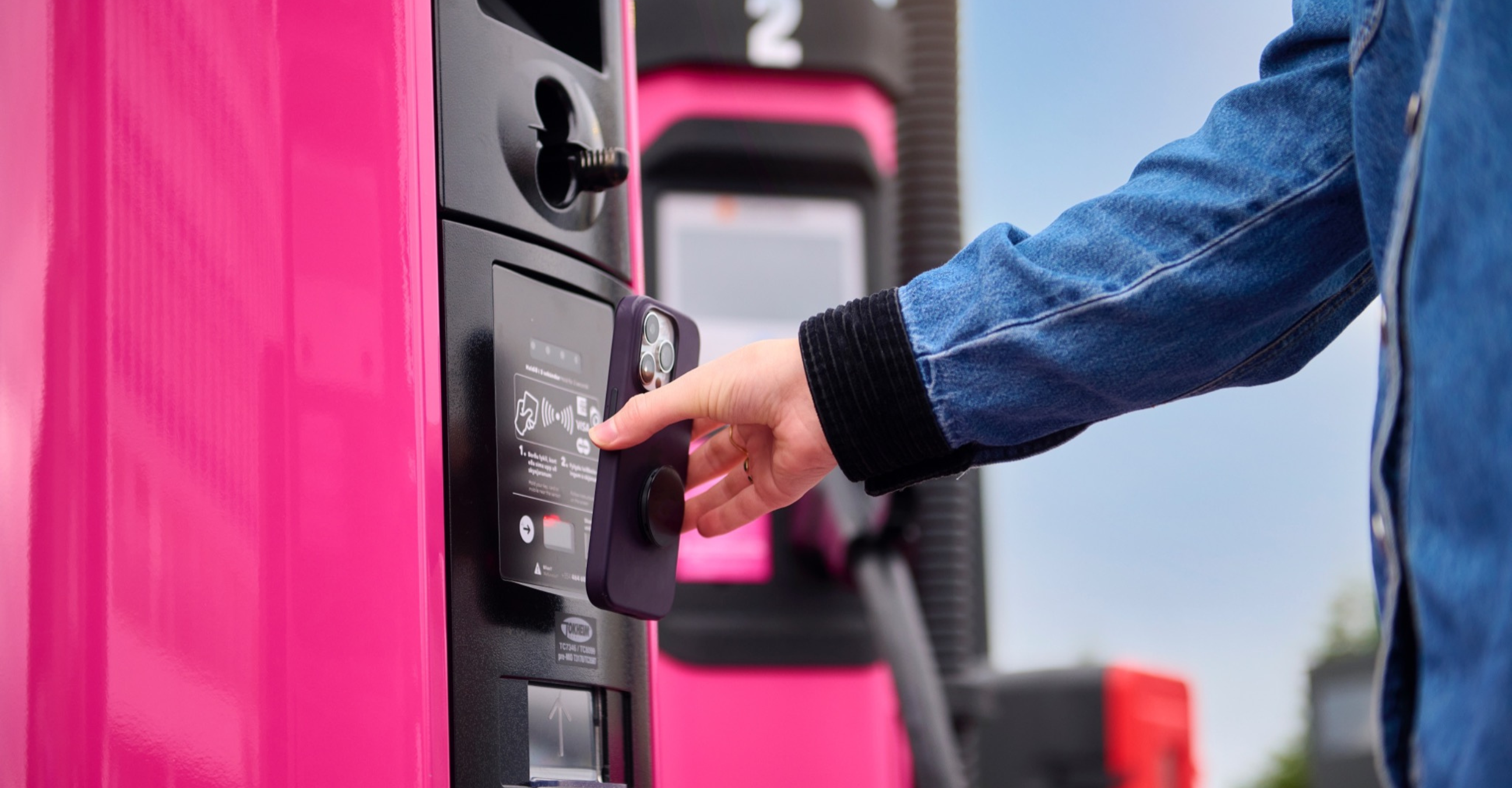
Pay at pump, in particular, concentrates these pressures into a single moment, bringing together hardware, payment, and connectivity in one interaction without the buffer of staff support. If authorisation lags or the terminal fails to respond, the delay can feel highly frustrating for customers. As sites add car washes, electric vehicle (EV) charging and additional services, the number of potential friction points only increases further. This means that in today’s market where switching fuel stations is easy and comparison is instant, reducing friction should be seen as an equal commercial priority to pricing strategy. But while this is all well and good in theory - how can this actually be delivered?
Getting the Fundamentals Right
It starts with investing in systems designed to perform reliably, both individually and as part of the wider site ecosystem. A smooth visit depends on dispensers delivering accurate volumes with stable flow, terminals responding without hesitation and payment authorisation processing quickly and consistently, because those fundamentals underpin the entire customer experience.
Crucially, however, individual performance is only part of the equation. Dispensers, payment systems and site software must operate as a coordinated whole. When those systems communicate efficiently, performance can become a great deal more predictable and resilient. This creates a clear opportunity for retailers to elevate the customer experience through reliable equipment, enhanced services, smarter technology and loyalty schemes that genuinely make a difference. For those willing to adapt their fuel sites to meet today’s consumer expectations, the opportunity is not only to reduce inconvenience, but to differentiate and elevate the overall experience.
Avoiding the Price of Inconvenience
Fuel Finder may have increased price transparency, but it does not fundamentally change what determines whether a driver returns and could have adverse effects on how a whole brand’s network is viewed.
Greater price transparency has undoubtedly sharpened competition. But treating price as the sole driver of loyalty risks oversimplifying how consumers actually choose. Convenience, reliability, and a consistently smooth visit remain powerful differentiators and will be noticed when missing.

Peter van Nauw, Senior Director, Systems & Payment

Soren Powell-Holse, Senior Sales Director, Europe, ANZ & KA
Related Products

Copyright © 2026 Dover Fueling Solutions® | A Dover Company | Privacy Policy | Cookies | Terms of Use


Dover Fueling Solutions
Dover Fueling Solutions