


Smarter Wetstock Management for Modern Fuel Sites
January 27, 2026
Fuel station owners who are looking to make their sites more modern have plenty of options available.
They could invest in infrastructure to expand their fuel offerings to accommodate electric vehicle (EV) motorists and those who drive cars powered by hydrogen and other alternative fuels, for example.
Many modern fuel sites provide customers with more than just fuel for their vehicles too. Spacious retail stores, fast food establishments and cafés, smart locker facilities and parcel drop-off points are all being seen more frequently within fuel stations.
Whichever approach you are taking to update your fuel sites, you need to ensure smarter wetstock management systems always form part of your plans. Dover Fueling Solutions® (DFS) is on hand to help…
Why you need to be moving away from manual fuel management systems
Wetstock monitoring solutions have been a part of the fuel industry for many years, but fuel station operators must move away from manual practices where the likes of spreadsheets and end-of-day slips are used to manage valuable fuel assets stored on a site.
If you still use a manual wetstock monitoring system, you risk your business losing valuable revenue because:
- Fuel runouts become harder to avoid, as immediate access to information about tanks is not possible.
- When you do not have access to real-time tank data, fuel leaks or thefts can also take weeks, if not months, to be detected manually.
- Human error can be made when handling data manually, such as misreading a dipstick or recording a reading incorrectly.
- Employees must physically dip fuel storage tanks, exposing them to hazardous fuel vapours and putting their safety at risk.
At a time where maintaining operational efficiency on site is just one of the daily pressures fuel station operators will face – on top of unpredictable fuel price shifts, tightening margins and higher staff turnovers – monitoring fuel inventory around a site cannot be guesswork.
Let DFS help you to upgrade your wetstock management systems
It is time to adjust from the idea that wetstock management solutions refer to just accurately measuring tank levels, keeping on top of stock control, and instantly detecting leaks.
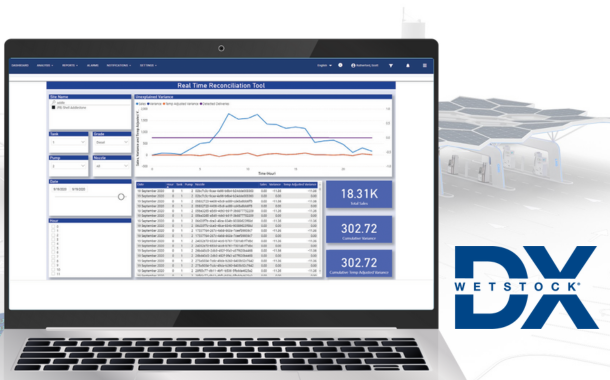
While certainly incorporating these aspects, our wetstock management system should be seen as the complete end-to-end management of fuel inventory at your fuel retail site. What this means is that you are keeping track of your fuel across all these touchpoints:
- The instant an order is made for a fuel delivery to your site.
- The moment fuel is pumped into a tanker for delivery.
- The time when fuel is transferred from a tanker to a storage tank on your forecourt.
- The instances where fuel is put into vehicles by motorists.
- The moment when retailers need to account for fuel in the reconciliation process.
As a fuel retailer, having this complete enterprise view of fuel inventory should be seen as being very valuable to your business. This is because it can increase the control you have on fuel levels at each fuel station you own or operate, as well as knowing you will only need to request fuel deliveries when these orders are necessary.
We previously highlighted the value of this type of service when we ran a wetstock monitoring proof of concept (POC). Covering ten stations across a six-month period, our research found that our wetstock management systems were able to detect four tank leaks. These issues collectively would have seen around 39,000 litres of fuel been lost if they had remained undetected for 12 months. You can read much more about our POC in this article.
.png)
Further benefits of using a smarter wetstock management solution can be seen by referring to our earlier points about how your business risks losing revenue by continuing to use manual systems:
- Avoid fuel runouts – Smarter wetstock management systems are automated, so times when a fuel restock is required will be much easier to predict.
- Quickly detect fuel leaks or thefts – Data about fuel tanks around your forecourts will be updated in real-time on a smarter wetstock management system and available to view via an easy-to-access Fairbanks analyst service.
- Remove the chance of human error – The automated setup of a smarter wetstock management system means that your wetstock inventory can be read, recorded and reconciled without any influence from a human.
- Keep employees safe – Probes placed inside a fuel tank of a smarter wetstock management solution will be used to make accurate and regular readings, so your employees will not need to carry out their own physical measurements.
Ready to introduce smarter wetstock management systems around the fuel sites you own and operate? Contact us online today to speak to one of our experts about how our solutions can help keep your forecourt running optimally. Alternatively, find a DFS distributor near you to get in touch with qualified wetstock experts who are local to you and your business.
Sources
- https://www.lsretail.com/resources/trends-that-are-changing-the-gas-station-industry
- https://www.christie.com/news-resources/blogs/forecourt-market-insight-2025/
- https://www.sia-partners.com/en/insights/publications/future-gas-stations-europe
- https://apea.org.uk/the-evolution-of-wetstock-management/
Related Products

Copyright © 2026 Dover Fueling Solutions® | A Dover Company | Privacy Policy | Cookies | Terms of Use


Dover Fueling Solutions
Dover Fueling Solutions