


How DFS Payment Technologies Work Together to Create a Connected Fuel Site
October 6, 2026
A connected fuel site should bring outdoor transactions and indoor retail activity together. Dover Fueling Solutions® (DFS) payment and retail systems can help connect the forecourt and convenience store (c-store) environment, giving customers a smoother journey from refuelling and charging to in-store purchases and payment. This can support a better customer experience while creating more opportunities to increase non-fuel retail (NFR) margins through c-store sales, promotions, loyalty activity and upselling.
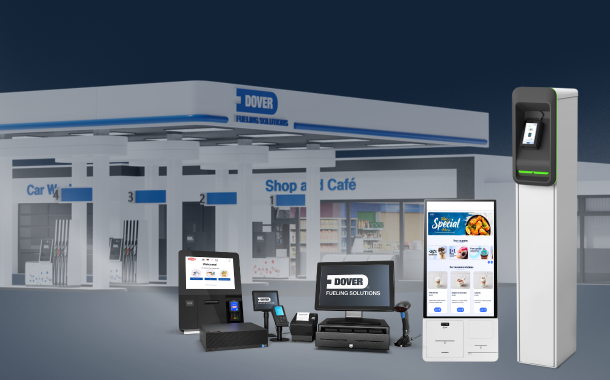
DFS brings these areas together through a portfolio of integrated fuel station and retail technology solutions. DFS Prizma®, DX Power™, DFS Crypto NOVA® and dedicated self-service touchpoints like the DFS Order Kiosk™ powered by FLYX and DFS Self-Checkout Kiosk each perform a specific role while contributing to a wider digital fuel site ecosystem – turning the ordinary fuel station into a connected convenience mobility hub.
Together, these technologies help fuel retailers access transaction data and customer activity across the forecourt and c-store. This can provide greater visibility of how customers interact with traditional fuelling equipment, electric vehicle (EV) charging and c-store operations, helping retailers identify opportunities to improve the customer journey and support NFR performance.
Why Does Fuel Site Technology Need to Work Together?
Fuel stations are rapidly developing into multi-service retail destinations. Alongside conventional fuels, modern sites must manage EV charging and alternative fuels, loyalty programmes, multiple payment methods and an expanding array of c-store offerings. The latter can include hot food, made-to-order beverages and quick grab-and-go retail.
Managing these areas through isolated systems can increase operational complexity. Information must be transferred manually, employees spend time switching between multiple platforms, and in-store queues can build up during peak hours if payment and ordering touchpoints operate in silos.
To solve this, DFS approaches connectivity as a complete, unified ecosystem rather than a collection of standalone products:
- DFS Prizma supports point-of-sale (POS), retail management and customer engagement.
- DX Power brings EV charging into the wider retail environment.
- DFS Crypto NOVA delivers a secure, consistent payment processing layer across all fuel dispenser (conventional or clean energy), c-store, kiosk and checkout touchpoints.
- DFS Order Kiosk and Self-Checkout Kiosk extend the c-store retail environment, empowering customers with fast, self-service food ordering, quick item scanning and effortless payment.
By unifying these core technologies into a single connected infrastructure, retailers can unlock the following operational and commercial advantages across their entire site:
Improved Efficiency
Connecting equipment, transactions and management systems can reduce the need to transfer information manually. Teams can spend less time moving between disconnected platforms and gain faster access to relevant site information.
Greater Visibility Across the Site
A unified technology approach gives retailers a clearer view of activity across fuelling, EV charging, c-store retail purchases, ordering trends and kiosk payments. This can support better-informed decisions at both site and network level.
Enhanced Transaction Security
Crypto NOVA provides a secure payment layer across compatible fuel site and retail touchpoints. This helps retailers protect payment information while providing customers with a consistent transaction experience.
Reduced Technology Complexity
An integrated DFS ecosystem can reduce the number of separate interfaces and processes used across the site. Working with one technology partner can also simplify planning when new capabilities are introduced.
Better Customer Experiences
Connected technology can make it easier for customers to move between fuelling, charging, ordering food at a self-service kiosk, buying c-store items and paying securely in a single, fluid journey. Integrated loyalty and promotional capabilities can also help retailers create more relevant experiences.
Future Scalability
DFS technologies are designed to help retailers add compatible devices, services and functionality as their requirements change. This allows businesses to develop their connected fuel site in stages rather than replacing every system at once.
The exact configuration will depend on the infrastructure and requirements of each site, but the principle remains the same: connected technology can provide greater value than individual systems operating separately.
DFS Prizma: Bringing Fuel Station and Retail Management Together
DFS Prizma is a connected mobility and convenience retail hub designed to extend beyond the capabilities of a conventional POS system.
It gives retailers a central environment from which to manage transactions and selected customer-facing services. By connecting activity across the fuel site and c-store, DFS Prizma can help create a more consistent view of the customer journey.
DFS Prizma can support a wide range of retail touchpoints, including fuel dispensers, alternative fuel dispensers, EV chargers, POS systems, the DFS Order Kiosk, the DFS Self-Checkout Kiosk and loyalty programmes. This allows c-store operators to offer flexible, automated checkout options that help reduce queue times, boost food service efficiency and capture higher basket values.
Within a connected fuel site technology ecosystem, DFS Prizma can help retailers:
- Bring fuel station, c-store and food-service transactions together.
- Manage different customer touchpoints – including self-service ordering and checkout kiosks – through a single connected platform.
- Support loyalty and promotional activity across all indoor and outdoor channels.
- Introduce self-service retail experiences inside the store.
- Access data across single or multi-site operations.
- Add new retail and mobility services as the business evolves.
Rather than just processing sales at the counter, DFS Prizma can help turn fast-paced convenience touchpoints into higher basket values and friction-free visit. By synchronising self-service order kiosks, self-checkouts, and outdoor pumps into a single retail engine, DFS Prizma helps site teams spend less time managing software and more time serving customers.
DX Power: Connecting EV Charging with the Wider Fuel Station
As retailers add EV charging to their sites, they also introduce new infrastructure, payment requirements and operational data. If these systems remain separate from the wider fuel station and c-store, they can add another layer of complexity for both customers and operators.
DX Power is a cloud-based platform designed to connect and manage EV charging infrastructure. It provides visibility and control over charging operations while helping retailers integrate EV charging with other fuel site, payment and retail technologies.
Through its connection with the DFS Prizma ecosystem, DX Power can bring EV charging into POS, payment, and loyalty processes. This makes it easy for EV drivers to charge their vehicles, walk into the c-store, order food via the DFS Order Kiosk or pick up retail items via the DFS Self-Checkout Kiosk – paying for everything in one streamlined visit.
DX Power can help fuel retailers:
- Connect EV chargers with fuel station and retail systems.
- View and manage charging activity through a cloud-based platform.
- Include EV charging within POS and c-store transactions.
- Offer customers a broader range of payment options.
- Connect charging activity with eligible loyalty programmes to drive store footfall.
- Maintain flexibility when selecting or upgrading charging infrastructure.
DX Power is interoperable and can work with different charge point operators and charge point management systems. This helps retailers introduce EV charging while retaining greater flexibility over their infrastructure.
DFS Crypto NOVA: Securing Payments Across Customer Touchpoints
As the number of services and devices across a fuel station increases, retailers need a payment platform capable of supporting consistent and secure transactions.
DFS Crypto NOVA is a modular payment platform designed for both indoor and outdoor environments. It can support payments across fuel dispensers, POS systems, EV chargers, order kiosks, self-checkouts and other retail devices.
The platform integrates with the DFS Prizma ecosystem and connects with technologies including OASE™, and Tokheim® and Wayne® fuel dispensers. This enables Crypto NOVA to support a unified payment experience across multiple areas of the site.
Crypto NOVA can help retailers:
- Process payments across different fuel site and retail devices.
- Support credit, debit, fuel and loyalty cards.
- Facilitate contactless payments through compatible cards, smartphones and wearables at all c-store touchpoints.
- Provide a consistent customer interface across touchpoints.
- Simplify the collection of transaction information.
- Support secure payment processing and transaction protection.
Crypto NOVA includes anti-tamper and anti-skimming measures within its hardware design. It is based on PCI PTS 6.x SRED accreditation and can be extended to support PCI DSS and POS encryption when combined with OASE.
Within the DFS ecosystem, Crypto NOVA provides a secure payment layer connecting customer transactions across fuel, charging, c-store retail and self-service kiosks.
How Does Data Move Through the DFS Ecosystem?
Each DFS technology has a distinct function, but the benefit of the ecosystem comes from the connections between them.
For example, a customer at your fuel station might start by refuelling or charging their vehicle. They then may walk into your c-store to order food at a DFS Order Kiosk and grab extra items for self-checkout.
As items are selected or fuel is pumped, the hardware transmits real-time order data to DFS Prizma, which updates inventory, applies loyalty rewards, and builds the basket. When the customer pays – whether at an in-store DFS Self-Checkout Kiosk, a counter terminal, or at the pump – DFS Crypto NOVA encrypts and processes the transaction securely. For EV drivers, DX Power syncs charging status directly with the POS and payment platforms.
The resulting flow can be summarised as:
- Site activity begins: A customer selects fuel, EV charging, or enters the c-store to purchase food and retail goods.
- Equipment information is captured: Connected infrastructure or in-store self-service touchpoints (such as a DFS Order Kiosk or DFS Self-Checkout Kiosk) capture transaction details.
- Services are brought into the retail environment: DFS Prizma and, for EV charging, DX Power help integrate activity with compatible retail, payment and loyalty processes.
- Payment is completed securely: Crypto NOVA supports the transaction through an appropriate connected payment touchpoint.
- Information becomes available for management: Connected systems provide relevant data to support reporting, reconciliation and operational decisions.
The specific journey will vary according to the retailer’s configuration. However, connecting these stages can reduce the gaps commonly created by separate devices and platforms.
A Connected Fuel Site Built Around Your Business
Not every retailer will need the same combination of technology. Existing infrastructure, site size, energy mix and customer requirements will all influence the most suitable configuration.
DFS works with retailers to understand these requirements and identify how compatible technologies can be connected. This could involve improving the integration of existing fuel station equipment, introducing a connected retail hub, adding EV charging management or expanding c-store capabilities.
By considering the complete site rather than approaching each product separately, DFS can help retailers create a more coordinated strategy.
Build Your Digital Fuel Site Ecosystem with DFS
DFS does more than supply individual fuel station products. We help retailers understand how site management, retail technology, EV charging and secure payments can work together as part of a complete connected ecosystem.
DFS Prizma, DX Power, Crypto NOVA, the DFS Order Kiosk, and the DFS Self-Checkout Kiosk each address vital operational needs. When brought together, they help retailers improve visibility, reduce complexity, boost c-store throughput, and create a fuel site ready to support the future of convenience retail.
Contact DFS to discuss your current infrastructure and explore the right connected fuel site technology for your business.
Related Products

Copyright © 2026 Dover Fueling Solutions® | A Dover Company | Privacy Policy | Cookies | Terms of Use


Dover Fueling Solutions
Dover Fueling Solutions